Annual Testing
Certified DCVA & RP testing with digital reports, tagging, and submission.
Backflow Testing
Certified annual testing, reporting, and full compliance for commercial, industrial, and institutional properties in Toronto.
In Toronto, backflow prevention is governed by the City’s Water Supply By-law (Chapter 851). Owners of industrial, commercial, institutional, and Part 3 residential properties — as well as construction sites — must install a backflow preventer and have it tested by a certified Cross-Connection Control Specialist.
Toronto operates one of the most established backflow prevention programs in Ontario, and the City actively follows up on overdue testing.
Learn more about the Toronto backflow prevention bylaw, or see how our annual backflow testing keeps your Toronto property compliant.
Toronto’s Water Supply By-law brings in industrial, commercial and institutional properties, Part 3 residential buildings as defined by the Ontario Building Code, and construction sites. The by-law’s schedules set out the covered sectors in detail, and the practical test is simple: if water on your property comes into contact with anything you would not want flowing back into the city main, you are in scope.
Toronto is denser and more mixed-use than the rest of the GTA, which means a single address often carries several devices under different owners — a ground-floor restaurant, a rooftop cooling system and a fire suppression line can each need their own assembly and their own annual test. Multi-tenant buildings are where compliance most often slips, because everyone assumes the device belongs to someone else.
Three separate triggers apply, and each produces its own test record. A device must be tested at the time of initial installation. It must be tested at least once every twelve months thereafter. And it must be retested within 72 hours after being cleaned, repaired, replaced, serviced or overhauled.
That third one is the deadline that causes trouble. If a device fails its annual test in a Toronto mechanical room on a Friday and the repair happens the same day, the retest is due by Monday — not at the next convenient site visit. Planning the repair and the retest as a single job is the only reliable way to stay inside it, which is why we schedule them together rather than treating the retest as a callback.
Toronto accepts backflow test reports through an online submission rather than a mailed paper form. The certified tester completes the report and files it; the property owner remains responsible for making sure it was actually submitted. A test that never gets filed leaves the property exactly as non-compliant as one that never happened.
We handle submission as part of every test and confirm it back to you in writing. If you need a copy of a report filed previously, Toronto Water can be reached at 416-394-8888 or backflow@toronto.ca. Our guide to the Toronto test report walks through what the report contains and how the filing process works.
A building permit is required for every new backflow preventer installation and for every replacement, and it comes from Toronto Building before the work starts — separately from the test report that Toronto Water receives afterwards. A new device therefore generates two pieces of paperwork on two different timelines, which is a common source of confusion when an owner is told their brand-new assembly is still non-compliant.
Device selection follows the CSA B64.10 hazard schedule. High-hazard applications require a reduced pressure principle assembly (RP or RPZ); lower-hazard connections are usually served by a double check valve assembly (DCVA). Choosing the wrong class means failing the survey and paying twice, so we confirm hazard level before quoting any Toronto installation.
Toronto runs one of the longest-established cross-connection control programs in Ontario and actively follows up on overdue testing. Falling behind typically brings a written notice with a deadline to correct the situation, and the property stays non-compliant until a passing report is on file. Enforcement is administrative rather than punitive, so responding inside the deadline normally closes the matter.
If you have received a notice, the fastest route through it is usually a single visit: locate every device on the property, test them all, repair or replace anything that fails, and file the results together. Properties that have never been surveyed are better off booking a cross-connection control survey first, so the scope is known before any work is quoted.
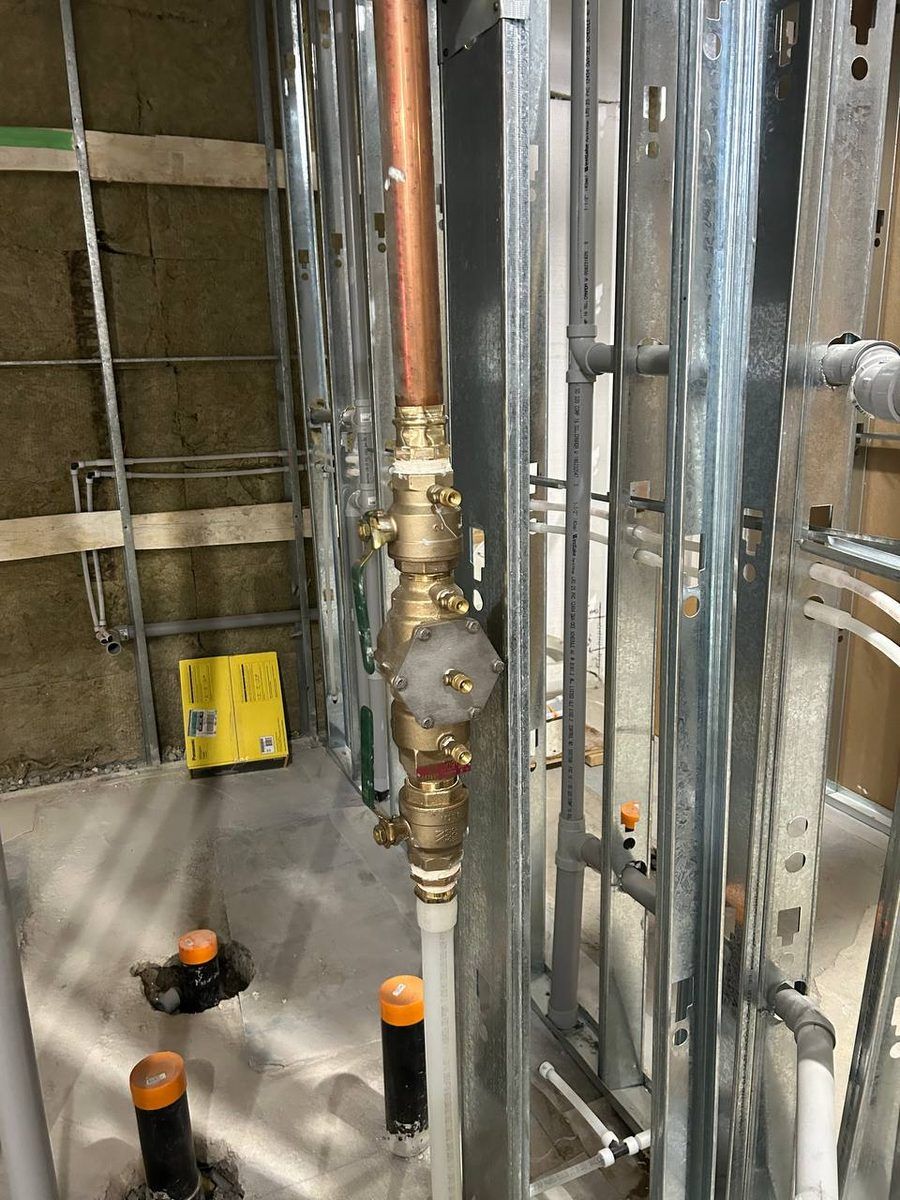
From single devices to multi-assembly systems, we test, install, and maintain backflow preventers on real Toronto properties — neatly piped, properly tagged, and documented for Toronto Water.
Certified DCVA & RP testing with digital reports, tagging, and submission.
Backflow TestingCompliant RPZ and double check valve installation for Toronto properties.
InstallationFast repair or replacement of failed devices, with retesting and re-filing.
Repair & ReplacementIdentify and eliminate contamination risks across your plumbing system.
CCC SurveysWe locate and assess every backflow device on your Toronto property.
Certified testing with NIST-calibrated equipment, on your schedule.
Digital test reports and proper device tagging for your records.
We file results with Toronto Water so you stay compliant.
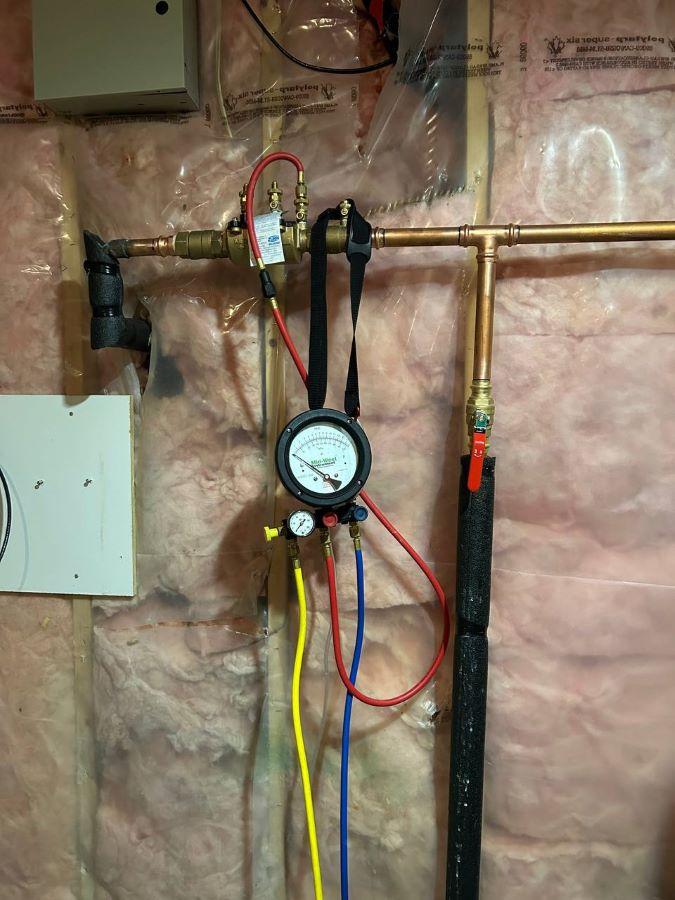
With decades of plumbing experience, OWWA-certified testers, and NIST-calibrated equipment, we make backflow compliance in Toronto straightforward.
OWWA-certified, with calibrated, NIST-traceable equipment.
Test, tag, repair, replace, and file — one team.
Certified testing, reporting, and submission handled for you.