Book a Test Call Now
Compliance Guide

Toronto Backflow Prevention Bylaw & Testing Requirements

What the bylaw requires, who it applies to, and how to stay compliant with Toronto Water — in plain language.

Backflow prevention is regulated in Toronto to protect the public drinking water system from contamination. Qualifying properties must install, test, and maintain approved backflow prevention devices — enforced through the City’s cross-connection control program, administered by Toronto Water under the Water Supply By-law (Chapter 851).

Who must comply with the backflow prevention bylaw?

The bylaw applies to properties that pose a potential risk to the drinking water system. If your property has an installed backflow preventer or has received a notice from the City, compliance is mandatory. Covered properties include:

  • Industrial facilities and manufacturing buildings
  • Commercial properties such as restaurants, retail plazas, and offices
  • Institutional buildings including schools, medical facilities, and municipal sites
  • Part 3 residential buildings, as defined by the Ontario Building Code
  • Any property identified through a cross-connection control survey

Annual backflow testing requirements in Toronto

To remain compliant under the program, you need certified annual backflow testing:

  • Backflow preventers must be tested once every 12 months
  • Each device on the property must be tested individually
  • Newly installed or replaced devices must be tested immediately
  • Test results must be documented and submitted within the City’s required timeframe

Annual testing confirms the device is functioning correctly and continues to protect against contamination.

Quick summary

  • Who: ICI and Part 3 residential properties, plus any flagged by a survey
  • How often: every 12 months, each device individually
  • Who tests: a certified Cross-Connection Control Specialist
  • Filing: documented results submitted to Toronto Water
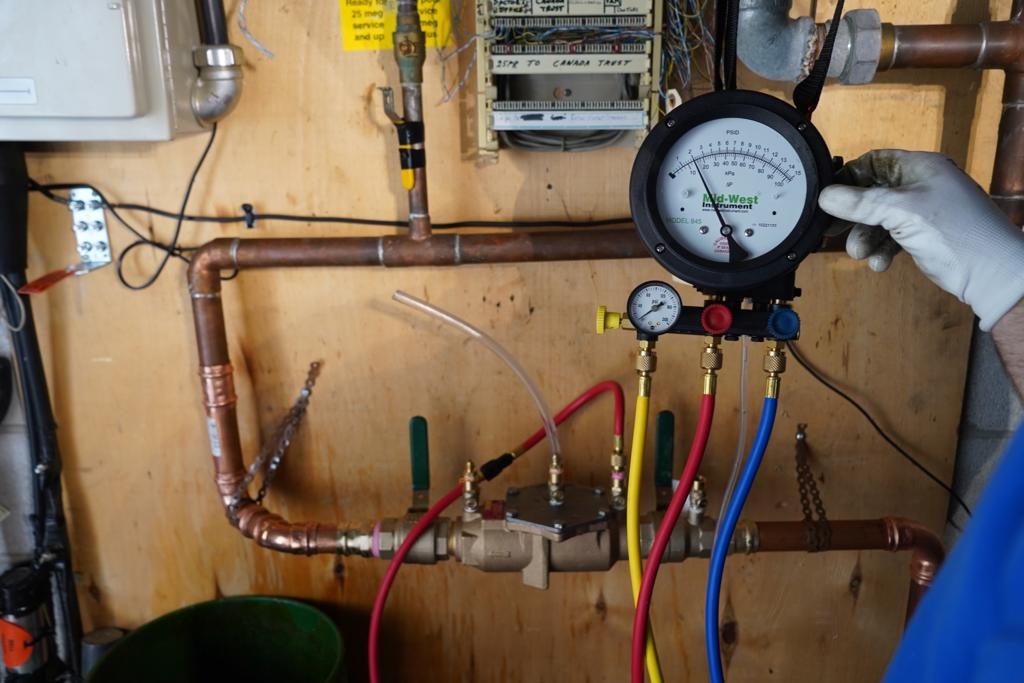
Certified tester verifying a backflow preventer with a calibrated gauge under Toronto's program
Annual testing is performed by a certified Cross-Connection Control Specialist using calibrated equipment.

What happens if a property is not compliant?

Failure to meet testing and reporting requirements may result in written compliance notices from the City, follow-up inspections or enforcement actions, and delays or restrictions until compliance is achieved. These measures are administrative — intended to ensure public water safety, not to penalize compliant owners.

What is a cross-connection control survey?

A cross-connection control survey is a formal assessment used to identify potential points where potable and non-potable water systems could connect. It determines whether a backflow preventer is required, the appropriate device type (DCVA or RP), and the level of risk associated with the property’s water use. Survey results often trigger device installation and ongoing testing requirements under the bylaw.

How property owners stay compliant

Ongoing compliance typically includes annual certified backflow testing, proper tagging and documentation of devices, submission of results to the City, and prompt repair or replacement if a device fails. Requirements vary by municipality — see our backflow regulations by town. Most owners work with certified professionals to ensure accuracy and avoid missed deadlines.

Questions, Answered

Toronto backflow bylaw FAQ

Yes. For qualifying properties, annual backflow preventer testing is mandatory under the City’s cross-connection control program administered by Toronto Water. Testing must be completed by a certified tester and submitted within the required timeframe.
Properties that are industrial, commercial, institutional, or classified as Part 3 residential under the Ontario Building Code are commonly required to comply. Properties identified through a cross-connection control survey, or those with an installed backflow preventer, are also subject to annual testing.
Backflow preventers must be tested once every 12 months. Each device on a property must be tested individually, and newly installed or replaced devices must be tested immediately after installation.
If a device fails testing, it must be repaired or replaced and then retested to confirm proper operation. Compliance is only achieved once a passing test result is documented and submitted.
Yes. Test results must be documented and submitted in accordance with City requirements. The property owner is responsible for ensuring submission occurs, even when testing is performed by a third party.
Most single-family homes are not subject to the same requirements. However, Part 3 residential buildings, such as larger multi-unit properties, may be required to comply depending on risk level and system design.
Yes. If annual testing is missed or documentation is not submitted, the City may issue compliance notices and require corrective action before the property is considered compliant again.
Related

Keep exploring

Annual Backflow Testing

Our certified testing service for Toronto properties.

Backflow Testing

Testing in Toronto

Local service and compliance for Toronto.

Toronto

Cross-Connection Surveys

Identify the risks the bylaw is designed to prevent.

CCC Surveys

Not sure if your property is compliant?

We’ll confirm your requirements, test your devices, and handle the submission to the City.

Do I need a test?