
Once every 12 months, at installation, and within 72 hours of any repair in Toronto. Here is the schedule, who can do the test, and how to keep several devices on one date.
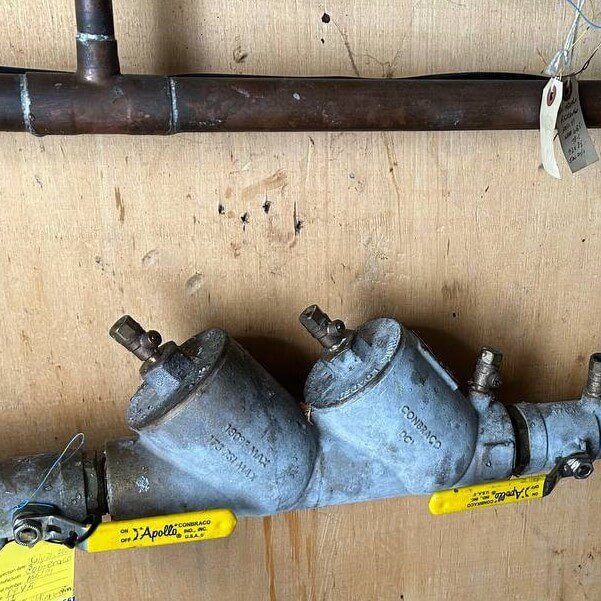
Your device was tagged last spring and nobody has thought about it since. Now a tenant turnover, a renewal reminder or a letter from the City has you asking the question every property manager in Ontario eventually asks: how often does this thing actually need to be tested?
Quick answer
- Every backflow preventer in Ontario is tested once every 12 months, and each device is tested and reported individually.
- A new or replaced device is tested at installation, before it goes into service.
- In Toronto, a device that is cleaned, repaired, replaced, serviced or overhauled must be retested within 72 hours.
- Only a certified Cross Connection Control Specialist with calibrated gauges can perform a test that the municipality will accept.
- The property owner is responsible for the test and for making sure the report is filed, even when a contractor does the work.
Why does a backflow preventer need testing every 12 months?
Because it is a mechanical device that fails silently. Check valves, springs and rubber seats wear with every pressure swing, and a stuck check looks identical to a healthy one from the outside. A test with calibrated gauges is the only way to prove the device still holds, which is why every municipal program in the GTA sets the interval at 12 months.
The clock runs per device, not per property. Four assemblies in one mechanical room means four tests, four tags and four reports.
Rule of thumb: the due date is 12 months from the date on the current tag. If the tag is missing or unreadable, treat the device as overdue and book a test.
What are the three events that trigger a backflow test?
Installation, repair and the annual cycle. Every device is tested when it is first installed, again after any work is done on its internals, and at least once every 12 months in between. Here is how the timing works for each.
| Trigger | When the test is due | Why it matters |
|---|---|---|
| New installation or replacement | At installation, before the device goes into service | Proves the assembly was installed correctly and seals. In Toronto a building permit is required before the work. |
| After cleaning, repair, service or overhaul | Within 72 hours (Toronto rule) | Any work on the checks or relief valve can disturb a seal that looked fine on the bench. |
| Routine annual test | Once every 12 months from the last passing test | Catches wear before it becomes a failure and keeps a current report on file. |
The 72-hour retest is the one that catches people out. If a tester replaces a check kit on Monday, the retest and the new report need to reach the City by Thursday. We schedule the retest as part of the repair visit so it never falls through the gap.
Does the testing schedule differ between Toronto, Vaughan and Peel?
No. The 12-month interval is the common thread across every GTA program; what changes is the by-law name, who receives the report and how it is submitted. Toronto’s requirement sits in the Water Supply By-law (Chapter 851), administered by Toronto Water, which accepts reports through an online form only.
- Toronto: Chapter 851, reports filed online with Toronto Water. See backflow testing in Toronto.
- Vaughan: By-law 177-2020, reports to the City. See backflow testing in Vaughan.
- Markham: By-law 2012-29, reports to the City.
- Mississauga, Brampton and Bolton: Peel Backflow Prevention By-law, reports to the Region of Peel. See backflow testing in Mississauga.
- Oakville: Halton Region Cross-Connection Control Program, which publishes a list of authorized testers.
For Richmond Hill, Aurora, King City, Durham and Barrie, see our by-town guide to Ontario backflow regulations.
Due this year? We test, tag, file the report with your municipality and remind you 11 months later — $350 for a single device, as low as $200 per device on larger sites. Get a fixed quote or call (647) 578-9903.
What happens if the 12 months pass without a test?
Your property is non-compliant from the day the test lapses, even if the device works perfectly. An untested device is treated as a failed one, because no report proves otherwise.
In Toronto, enforcement is administrative. You receive a compliance notice with a deadline, and the file stays open until a passing report is submitted. Ignoring the notice escalates it, and the by-law provides for penalties and water-service measures for continued non-compliance.
Don’t wait for the letter: a lapsed test is a quick fix if you book before the notice arrives. Once a notice is issued you are working to the City’s deadline, not your calendar. Already have one? See what to do in the first 30 days.
Who is allowed to do the annual test?
Only a certified Cross Connection Control Specialist, OWWA-certified in Ontario, using gauges that are calibrated annually and NIST-traceable. A test by anyone else cannot be filed, so the property stays non-compliant no matter what the gauge read.
Backflow Inspector, a service of MT Drains & Plumbing in Richmond Hill, has been in the plumbing trade for more than three decades and tests with certified specialists across the GTA.
How do I keep a multi-device property on schedule?
Align every device to one annual date and let one contractor hold the calendar. Staggered tests from different vendors are how a property ends up with three tags, three months and one device quietly overdue.
- Photograph every tag and record the test date, device type and serial number.
- Book all devices for a single visit; per-device pricing drops on multi-device sites.
- Confirm in writing that the tester files the report, and keep a copy with the tag photo.
- Diarise the next test 11 months out, or let us send the reminder.
- Retest immediately after any repair instead of waiting for the annual date.
Not sure your property is covered at all? Our 30-second eligibility check sorts that out, and the annual testing service page covers what a visit includes.
Quick answers
Due for your annual test? Book it once and we handle the rest
We test, tag, file the report with your municipality and remind you before the next one is due — $350 for a single device, less per device on multi-device sites, fixed quote before booking.