
Installing a backflow preventer in Toronto means a hazard survey, a device chosen under CSA B64.10, a building permit, a licensed plumber and a first test that is filed with the City. Here is each step.
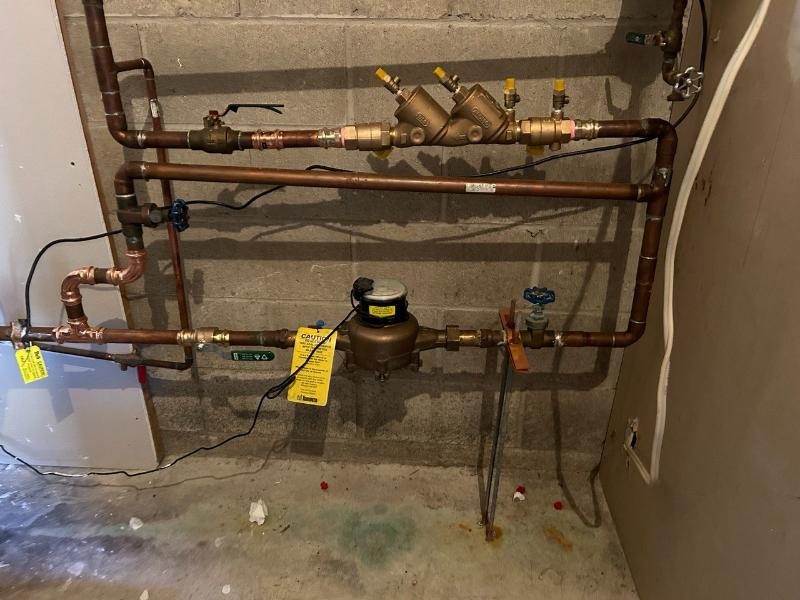
A cross-connection survey or a City notice has told you a backflow preventer must be installed, and the clock is running. Installing one is more than fitting a valve: it involves a hazard assessment, a permit and a first test before the City considers the job done.
Quick answer
- Installing or replacing a backflow preventer in Toronto requires a building permit from Toronto Building, obtained before the work starts.
- The device type — DCVA, RP, PVB or DCDA — is selected by hazard level under CSA B64.10, not by price.
- A licensed plumber installs the device; a certified Cross Connection Control Specialist then tests it and files the report with Toronto Water.
- Installation pricing depends on device size and type, location and whether an RP needs a drain, and is quoted after a site visit.
- The initial test and each annual test is $350 for a single device, less per device on multi-device sites.
Our backflow preventer installation service covers every step below, from the survey to the filed report.
What are the steps to install a backflow preventer in Toronto?
Five steps, in a fixed order: survey, device selection, permit, installation and the first test. Skipping or reordering any of them is the usual reason a project stalls or a report is rejected.
- Survey and hazard assessment. A cross-connection control survey identifies where potable water meets anything that could contaminate it and rates each connection as low or high hazard.
- Device selection per CSA B64.10. The hazard rating, the pipe size and whether back pressure or back-siphonage is the risk determine the device. The table below summarizes the options.
- Building permit from Toronto Building. The permit is applied for before any work and covers both new installations and replacements.
- Installation by a licensed plumber. The assembly is installed with isolation valves, accessible test cocks and a drain for an RP, at a height and location where it can be tested every year.
- Initial test and report. A certified Cross Connection Control Specialist tests the new device, tags it and files the report through the City’s online form. The property is compliant from that date.
Which backflow preventer do I need?
The one that matches the hazard, as set out in CSA B64.10. A low-hazard connection, such as an office building with no chemical processes, typically takes a DCVA; a high-hazard connection, such as a boiler with glycol, a car wash or a medical clinic, takes an RP.
| Device | Typical use | Installation note |
|---|---|---|
| DCVA | Low-hazard premise isolation, many offices and retail | No drain needed |
| RP / RPZ | High-hazard: boilers with chemicals, clinics, kitchens, car washes | Relief valve discharges water, so a drain or funnel is required nearby |
| PVB | Irrigation systems | Installed above ground; protects against back-siphonage only |
| DCDA | Fire sprinkler lines | A DCVA with a bypass meter |
For the plain-English version of how each device works, read types of backflow prevention devices.
Do I need a building permit to install a backflow preventer?
Yes. In Toronto, a building permit from Toronto Building is required for every new backflow preventer installation and every replacement, and it must be obtained before the work begins. The Water Supply By-law and the Ontario Building Code work together here.
The permit and the test report are separate documents. The permit authorizes the work; the report, filed after the test, is what makes the property compliant.
Requirements in other municipalities follow a similar pattern but differ in detail, so check our by-town regulations guide or ask us before scheduling.
What drives the installation price: the size and type of device (an RP costs more than a DCVA of the same size), where it goes (an open mechanical room versus a cramped ceiling space), whether a drain must be added for an RP, and whether existing piping needs rework. Because those vary so much, installation is quoted after a site visit, as a fixed price confirmed before any work starts.
Need a device installed and tested? We survey, arrange the permit, install and file the first report, then return every 12 months — testing is $350 for a single device, less per device on multi-device sites, and installation is quoted after a site visit. Book a site visit or call (647) 578-9903.
What happens at the first backflow test?
The certified tester connects a calibrated gauge to the test cocks, checks each check valve and, on an RP, the relief valve, then records the readings, tags the device and files the report. That first report starts the device’s 12-month cycle.
The first test also confirms the installation itself: that the isolation valves hold, the test cocks are reachable and an RP discharges to the drain correctly. Problems are far cheaper to fix on day one than at the first annual test.
Backflow Inspector, a service of MT Drains & Plumbing, installs and tests under one roof, so the plumber who fitted the assembly and the specialist who certifies it work from the same plan. If a device is ever cleaned, repaired or serviced later, remember Toronto’s 72-hour retest rule; our repair and replacement page explains how that works.
Quick answers
Need a backflow preventer installed in Toronto?
We survey, arrange the permit, install and file the first test report; installation is quoted after a site visit and testing is $350 for a single device.