
A cross-connection control survey maps every point where your drinking water could meet a contaminant, rates each hazard and tells the City what devices your property needs. Here is when Toronto asks for one.
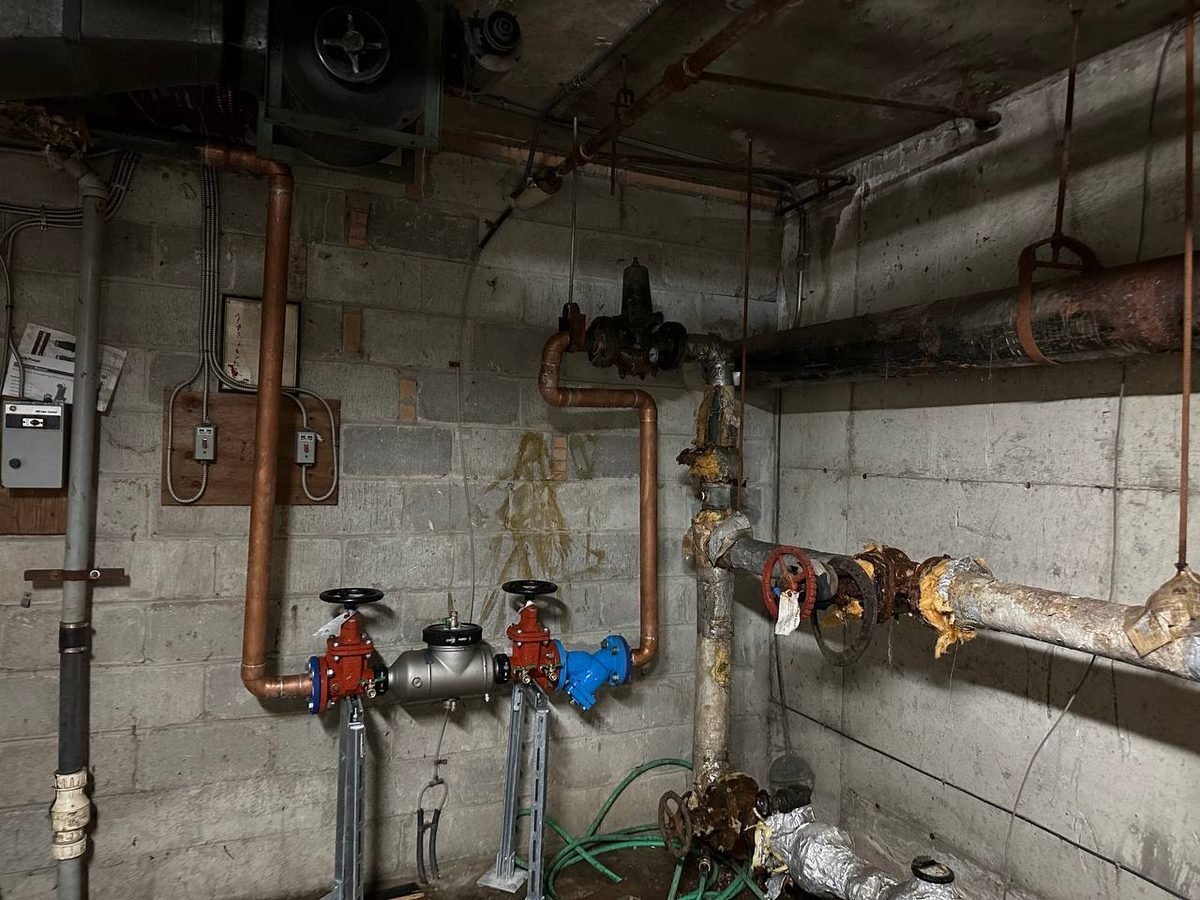
The letter from Toronto Water doesn’t ask for a test. It asks for a cross-connection control survey, and nobody in your building is quite sure what that is or who does it. Here is what the surveyor looks for, what the report says, and what happens once it lands on your desk.
Quick answer
- A cross-connection control survey is a site-wide inspection that finds every point where your drinking water could meet a contaminant.
- Each connection gets a hazard rating and a device recommendation based on CSA B64.10.
- Toronto Water asks for a survey when a property enters the program, changes its use, or receives a City notice.
- After the survey: install any missing devices (permit required), test them, and file the reports with Toronto Water.
- Only a certified Cross Connection Control Specialist can carry out the survey and sign the report.
What is a cross-connection control survey?
A cross-connection control survey is a walk-through of your entire water system by a certified Cross Connection Control Specialist, who maps every place potable water could meet something it shouldn’t and rates the hazard at each one. It inspects the building, not a single device.
That is the key difference from an annual test. A backflow test checks one device with a calibrated gauge and produces a pass or fail. A cross-connection control survey tells the City which devices your property should have in the first place.
What does the surveyor actually inspect?
The surveyor follows the water from the meter to every fixture and piece of equipment it feeds, looking for connections where back pressure or back siphonage could pull a contaminant into the supply. On a typical commercial property that means:
- The incoming water service, meter and any existing containment device at the property line
- Boilers, heating loops and chemical feed systems
- The fire sprinkler connection and any fire pump
- Irrigation systems, hose bibs and yard hydrants
- Kitchen equipment: dishwashers, carbonators, ice machines and mop sinks
- Medical, dental, lab and veterinary equipment
- Cooling towers, humidifiers and process equipment
- Every existing backflow preventer: type, location, tag and test history
What does the survey report contain?
The report is an inventory of your cross-connections, a hazard rating for each one, and a recommendation for the device that belongs there. It becomes the City’s record of what your property must install and maintain.
| Section | What it tells you |
|---|---|
| Property summary | Address, use of the building, water service details and who the City should contact |
| Connection inventory | Every cross-connection found, with its location and the equipment it serves |
| Hazard rating | Each connection rated from low to severe, following CSA B64.10 |
| Device recommendations | DCVA for low-hazard connections, RP for high-hazard ones, PVB on irrigation, DCDA on fire lines |
| Existing device status | Which installed devices are correct, which are the wrong type, and which are missing |
| Action list | What to install, repair or replace, in order of priority |
Owner responsibility: the survey report goes to the City, but the obligation to act on it stays with the property owner. A lease or condo declaration can shift the cost to a tenant or corporation; it cannot shift who Toronto Water writes to.
When does Toronto require a cross-connection control survey?
Toronto Water asks for a survey in three situations: when a property first enters the cross-connection control program, when the use of a building changes, and when the City issues a notice after identifying a possible hazard. All three come under the Water Supply By-law (Chapter 851).
- Entering the program. Industrial, commercial and institutional properties, Part 3 residential buildings and construction sites fall under the by-law, and a survey establishes what each one needs.
- Change of use. A warehouse becomes a food plant, an office becomes a clinic, a retail unit adds a commercial kitchen. The hazard changes, so the devices may have to change with it.
- A City notice. Toronto Water can bring any property into the program through a survey, and a notice usually comes with a deadline for submitting one.
The City’s own program page is at toronto.ca, and Toronto Water can be reached at 416-394-8888 or backflow@toronto.ca if you are unsure whether a notice applies to you.
Holding a survey notice? We survey the property, install what the report calls for, test every device and file with Toronto Water — annual testing from $350 per device, with the survey and any installation quoted up front. Request a fixed quote or call (647) 578-9903.
What happens after the survey?
The survey is the start of a sequence, not the end of it: install, test, file. Each step has its own paperwork, and the property is only compliant once the last one is done.
- Review the action list. Agree on which recommendations apply and in what order; some can be scheduled, others are urgent.
- Pull the permit. In Toronto a building permit is required before any new backflow preventer installation or replacement.
- Install the devices. RP assemblies need a drain nearby for the relief valve discharge, which often decides where the device can go.
- Test at installation. Every new device is tested when it goes in, individually, with calibrated gauges.
- File the reports. Each device gets its own test report, submitted through the City’s online form.
- Repeat annually. From then on every device is tested once every 12 months and the report filed again.
Who can carry out the survey?
A survey has to be done by a certified Cross Connection Control Specialist, the same OWWA certification required for testing. The City will not accept a survey signed by an uncertified contractor.
Backflow Inspector, a service of MT Drains & Plumbing, has worked on GTA water systems for more than thirty years, so the surveyor who maps your building is the same team that installs and tests what it recommends. If you are not sure whether your property is even in the program, start with our 30-second eligibility check.
Quick answers
Got a survey notice? We map it, fix it and file it
Backflow Inspector surveys the property, installs what the report calls for and tests every device for $350 each, with the survey and any installation quoted up front.