
The fire sprinkler line is a cross-connection like any other, protected by a DCDA that needs its own annual test. Here is why it gets missed, and how the test is coordinated with your alarm monitoring.
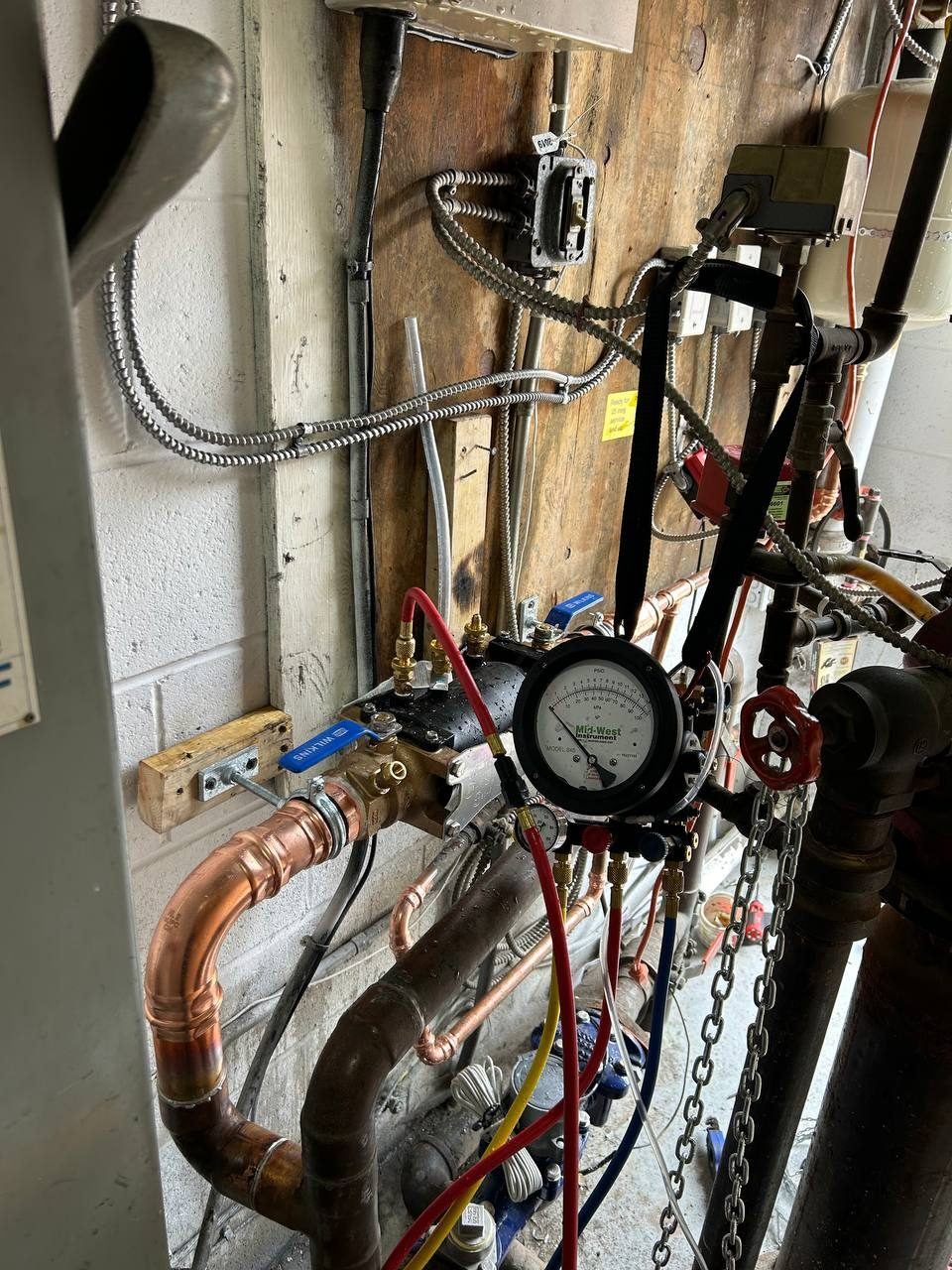
Your building passed its backflow test last year, so the City notice is a surprise. It lists a device you did not know you had: the one on the fire sprinkler line, in a room nobody opens. Fire lines are the device that gets missed most often on multi-device sites, and they come with rules of their own.
Quick answer
- A fire sprinkler line is a cross-connection: its water sits stagnant for years and may contain antifreeze or corrosion inhibitors.
- Most fire lines are protected by a DCDA, a double check detector assembly: two check valves plus a bypass meter that registers small flows.
- The fire line device is tested once every 12 months like every other device, individually, by a certified Cross Connection Control Specialist.
- Testing briefly isolates the sprinkler supply, so the sprinkler contractor and the alarm monitoring company need to be told.
- Count it: many sites file the domestic device every year and never file the fire line.
Why is a fire sprinkler line a cross-connection risk?
Sprinkler water does not move. It sits in steel pipe for years, picking up rust, bacteria and whatever additives the system uses, and under the wrong conditions that water can be pushed back into the building’s drinking water supply. That is the definition of a cross-connection.
Two things make it worse than a typical plumbing connection. First, the volume is large, so a backflow event moves a lot of contaminated water. Second, fire pumps and fire department connections can create back pressure, pushing water toward the main rather than away from it.
Systems that use antifreeze or corrosion inhibitors carry a higher hazard rating, and a cross-connection control survey may call for a reduced pressure assembly instead of a DCDA. Our overview of backflow device types explains the difference.
What is a DCDA (double check detector assembly)?
A DCDA is the fire sprinkler version of a double check valve assembly: two independent check valves in series, plus a small bypass line with its own meter and its own small double check. It protects the water supply while letting the building detect leaks or unauthorized use on the fire line.
| Feature | DCVA | DCDA |
|---|---|---|
| Check valves | Two, in series | Two, in series, in a larger body |
| Bypass meter | None | Yes, with its own small double check |
| Typical use | Low-hazard domestic connections | Fire sprinkler and standpipe lines |
| Hazard level | Low | Low; a reduced pressure version where additives raise the hazard |
| Annual test | Yes | Yes, including the bypass assembly |
Why the little meter: a fire line normally carries no flow at all. If the bypass meter creeps forward between tests, water is leaving the fire line somewhere, which usually means a leak or an unauthorized connection downstream. The meter is a detector, not a billing meter.
How is a fire line backflow preventer tested?
The test itself is the same calibrated check as any other device: each check valve is isolated and its pressure differential recorded, and the bypass double check is tested as well. The difference is everything around it, because closing the shut-offs on a fire line takes the sprinkler system out of service for a few minutes.
- Notify the monitoring company. The tamper switches on the shut-off valves send a supervisory signal when the valves close. The alarm company needs to know it is a test, not an impairment.
- Coordinate with the sprinkler contractor. On larger systems the sprinkler contractor may want to be present or to schedule the test alongside their own inspection.
- Isolate and test. Shut-offs closed, gauges on, each check and the bypass recorded. The system is out of service only for the duration of the readings.
- Restore and verify. Valves reopened, tamper switches reset, and the monitoring company told the system is back to normal.
- Tag and file. The device gets its tag and its own test report, filed with the municipality.
Every step is routine for a tester who does fire lines regularly. It is the step that gets skipped by a tester who does not.
Multi-device site? We test the domestic, irrigation and fire line devices in one visit, handle the monitoring call, and file every report — $350 for a single device, as low as $200 per device on larger properties. Get a fixed quote or call (647) 578-9903.
Why does the fire line device get missed?
Because it belongs to a different trade, lives in a different room, and looks after itself. The domestic device is beside the meter where everyone sees it; the DCDA is in the sprinkler room behind a door marked for the fire contractor.
- Different contractor. The sprinkler company inspects the sprinklers. The plumber tests the domestic device. Nobody is assigned the valve in between.
- Assumed coverage. Owners often assume the annual sprinkler inspection includes the backflow test. It is a separate requirement, done by a separately certified person with calibrated gauges.
- It never fails visibly. A fire line device can be years out of test and show no symptom at all, because the line never flows.
- Old tags. A faded tag from a previous owner looks like compliance from across the room.
Tested with the sprinkler inspection? Unless the test was done by a certified Cross Connection Control Specialist, with calibrated gauges, and the report was filed with the City, it does not count. Ask for the filed report, not the tag.
Who is responsible for the fire line device?
The property owner, as with every device on the property, even where a sprinkler contractor or property manager handles the scheduling. The City writes to the owner, and the Water Supply By-law treats a missing fire line report the same as a missing domestic one.
Backflow Inspector, a service of MT Drains & Plumbing, tests DCDAs as part of regular annual backflow testing across the GTA. If you are not sure how many devices your property has, that is the first thing we check.
Quick answers
Does your fire line have a report on file?
We test domestic, irrigation and fire line devices in one visit, coordinate the alarm monitoring call and file every report, from $350 per device.